


The one data processing software package that does it all!
Clarity & innovation in data processing & visualization
iolite is the only time-resolved mass spectrometry software package that handles everything from basic trace element experiments, right through to imaging, geochronology and isotopic systems (e.g. Sr, Hf isotopes), with the ability to fully (or partially) automate the entire process.
Purchase Now
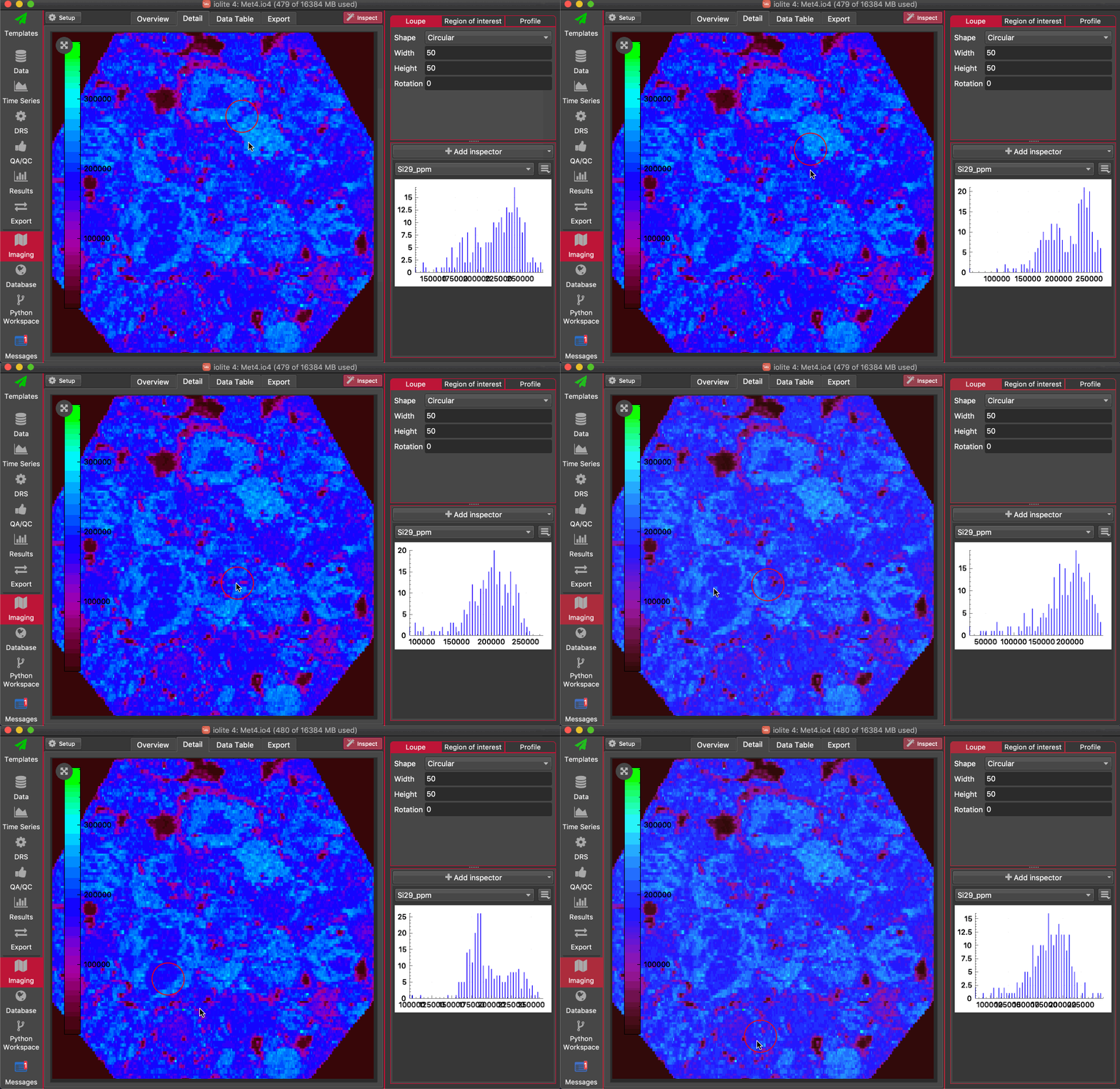
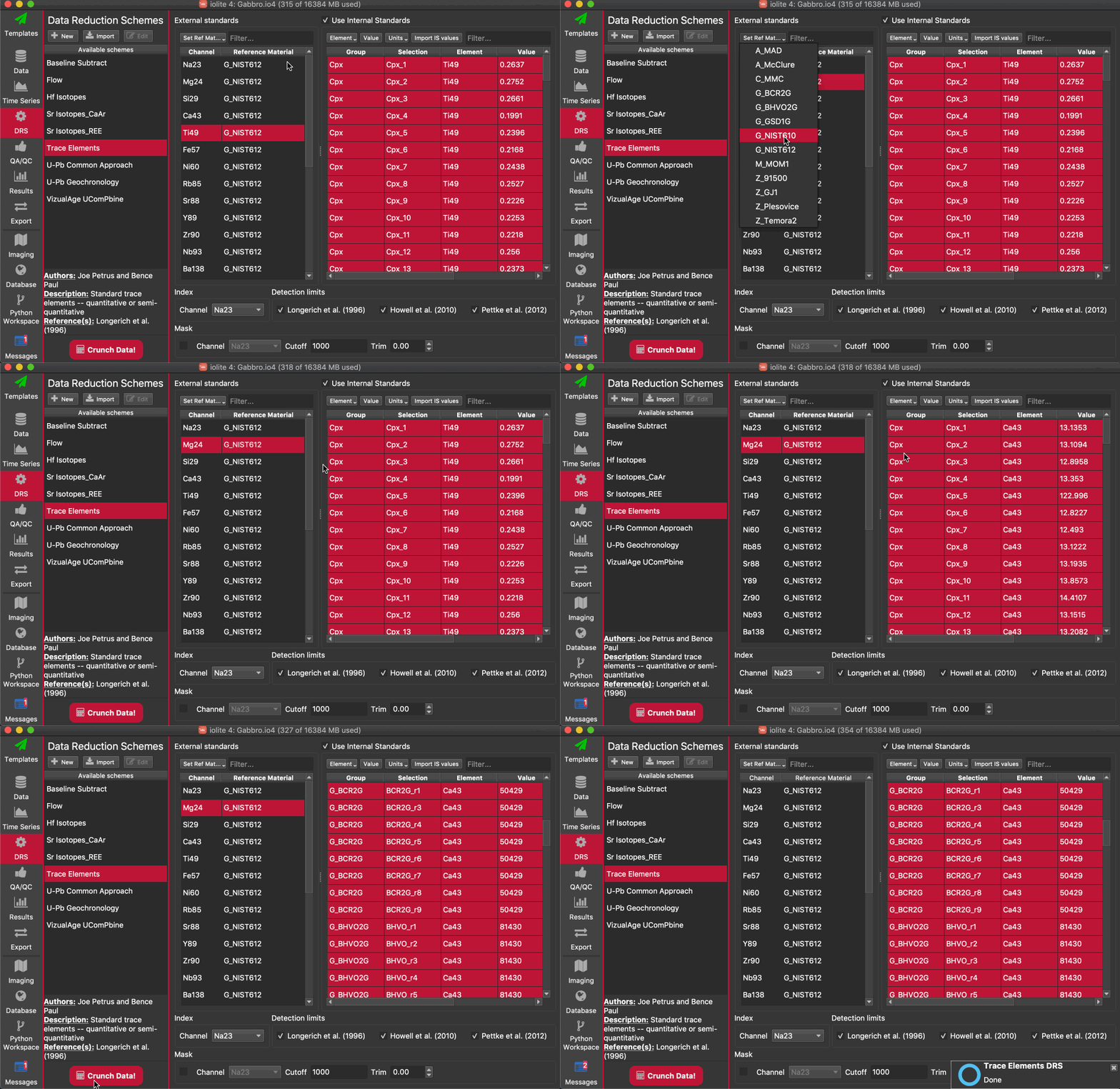
With a range of options, including semi-quant (ideal for imaging), fully quantitative, normalization# and multi-calibrant approaches*, iolite has a wide range of trace element solutions for any application.
Built for speed
iolite's basic Trace Elements DRS is written in C++ for speed and power, and performs the same functions as Trace_Elements and Trace_Elements_IS DRS from v3.
Full Limits of Detection (LODs) and error propagation calculations
A choice of three LOD calculations (Longerich et al., 1996; Howell et al., 2010; or, Pettke et al., 2012) and full error propagation are hallmarks of iolite's approach and flexibility.
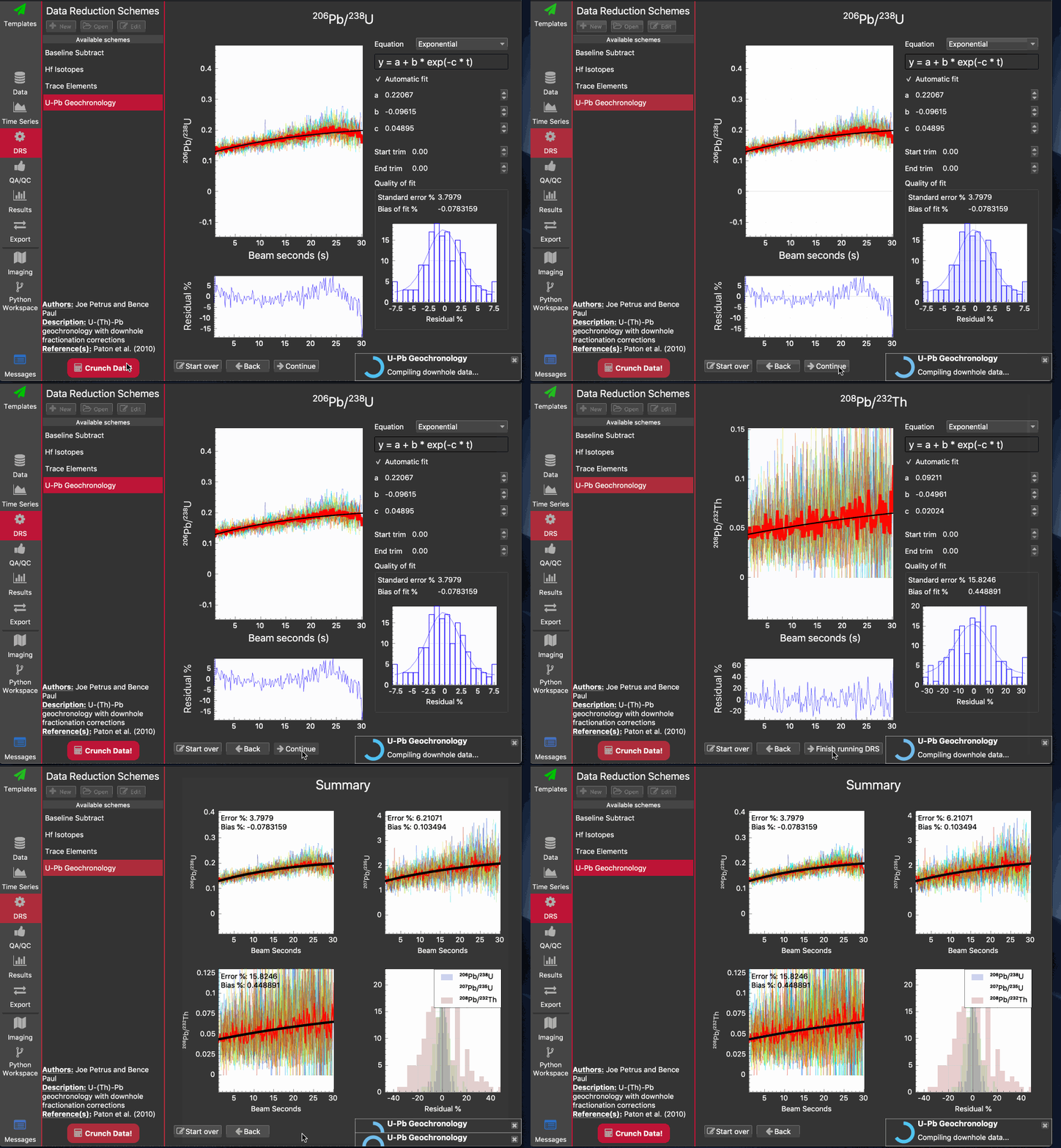
iolite has led the way in LA-ICPMS U-Pb geochronology for the past nine years, including Paton et al.'s 2010 paper (cited more than 500 times), and Petrus & Kamber's 2012 "VizualAge" plugin for iolite (cited more than 300 times). Building on these groundbreaking DRS, iolite v4 adds new features and an improved user interface to the most trusted U-Pb processing solution.
FAST & Easy to Use
iolite v4 is the leading solution for U-Pb geochronology, with a new fast and easy to use interface.
A Great Range of Features
iolite provides the analyst with choice and flexibility, with a range of downhole fit options and visualization tools.
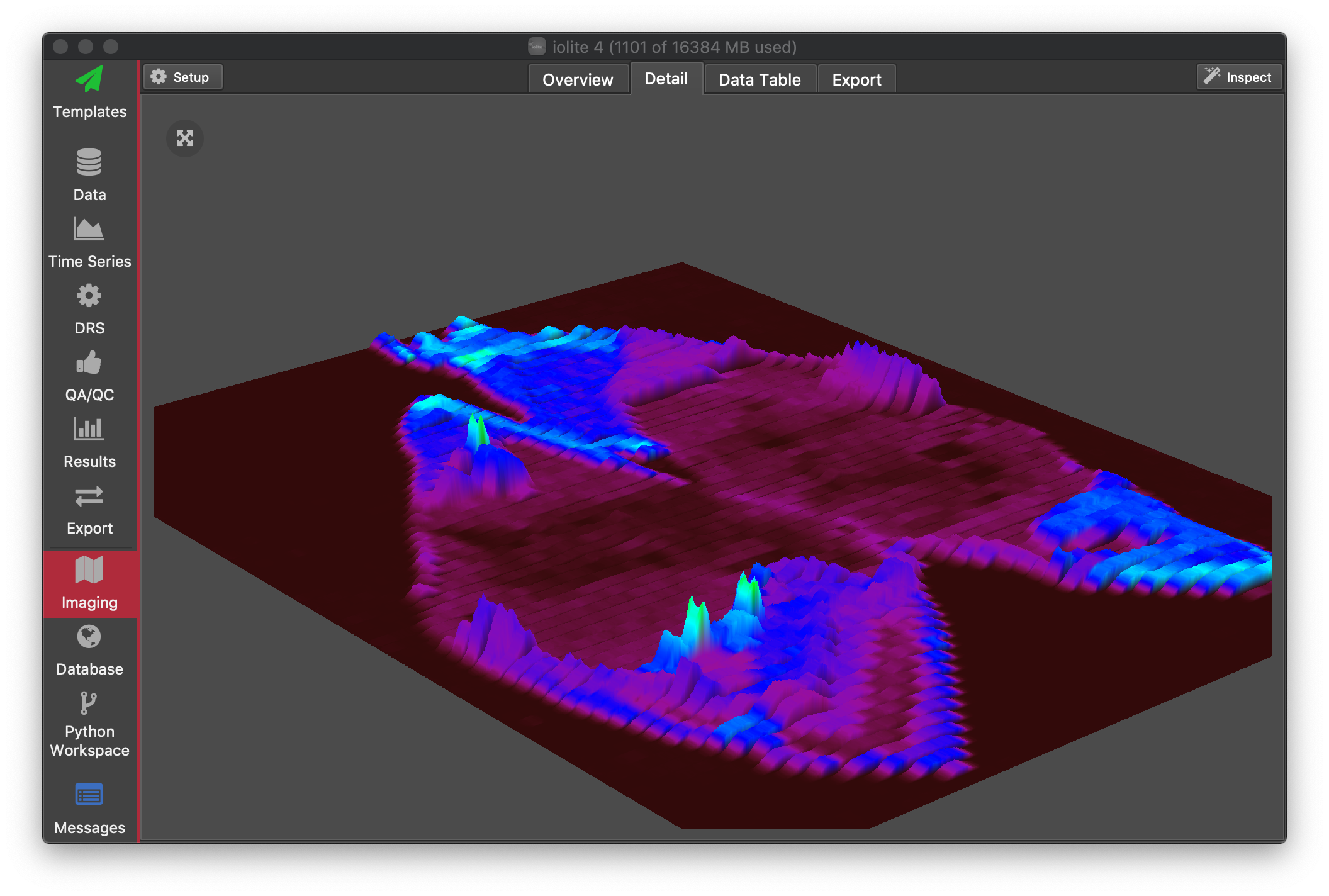
iolite provides powerful imaging capabilities from the group that invented CellSpace imaging, the Monocle image interrogation system and much more. All built into iolite v4.
Powerful Imaging Capabilities
iolite v4 offers a range of imaging options, including stacked images, 3D viewing, and more. iolite also provides a range of export options so that you can continue to process your images in other software, or make the most of iolite's built in tools.
A Great Range of Features
iolite v4 allows the analyst to draw regions of interest (ROI), or create ROI based on criteria, and provides stats for each ROI to compare parts of your image, all within iolite.
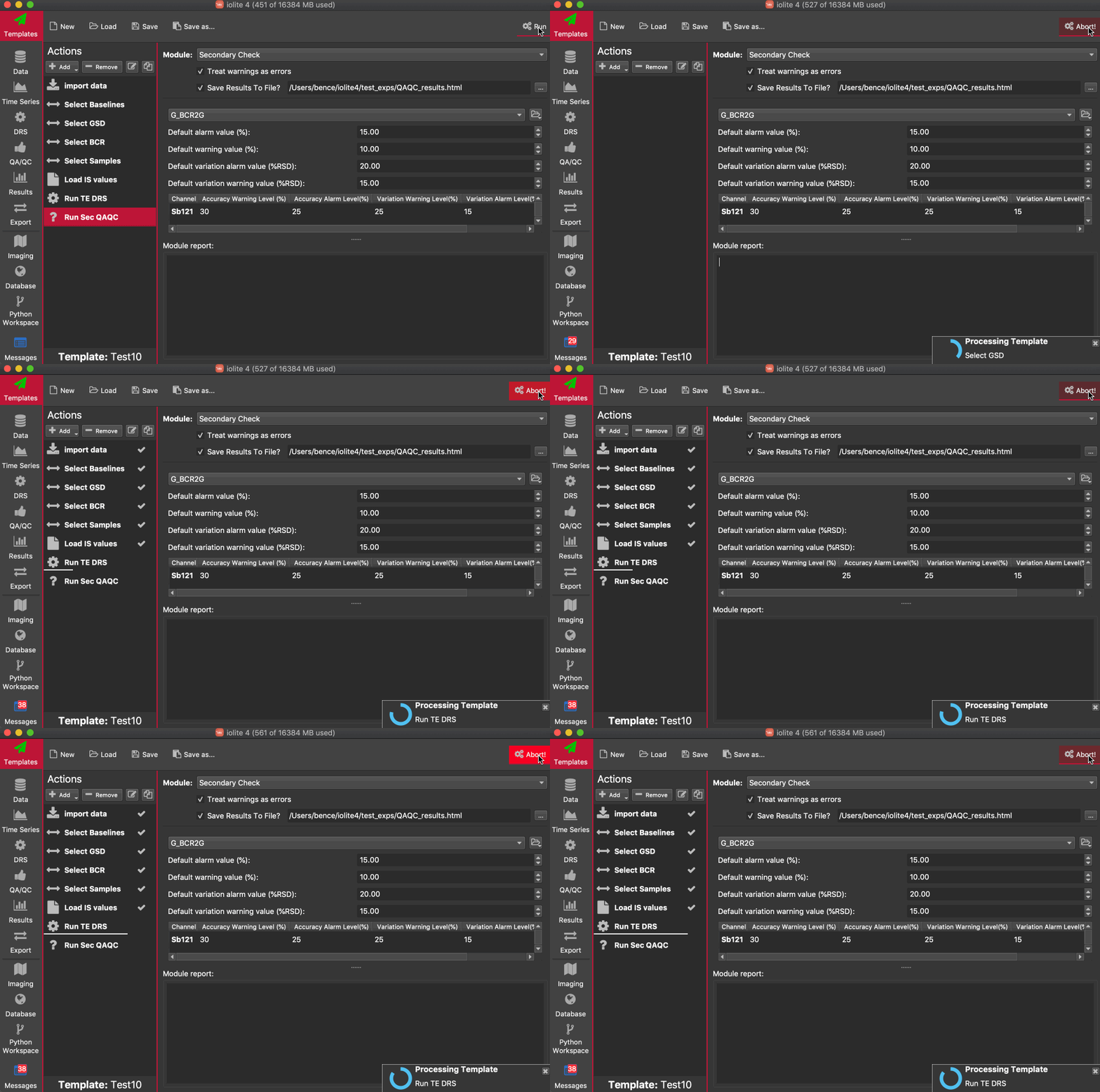
iolite v4 saves you time and improves reproducibility with Processing Templates: a macro system for LA-ICPMS workflows.
Improve Your Throughput By Up To 80%
iolite provides a range of 'Actions' to perform tasks such as importing data, selecting baselines, reference materials etc, through to more advanced tasks such as running QAQC modules. With customisable levels of user interaction, the analyst remains in full control.
More Reproducible
Remove the effect of inter-analyst bias, standardize your approach, and improve your accountability by using reproducible and flexible templates. Templates are also open and sharable, so you can share them between labs, or expand on what others have already created.
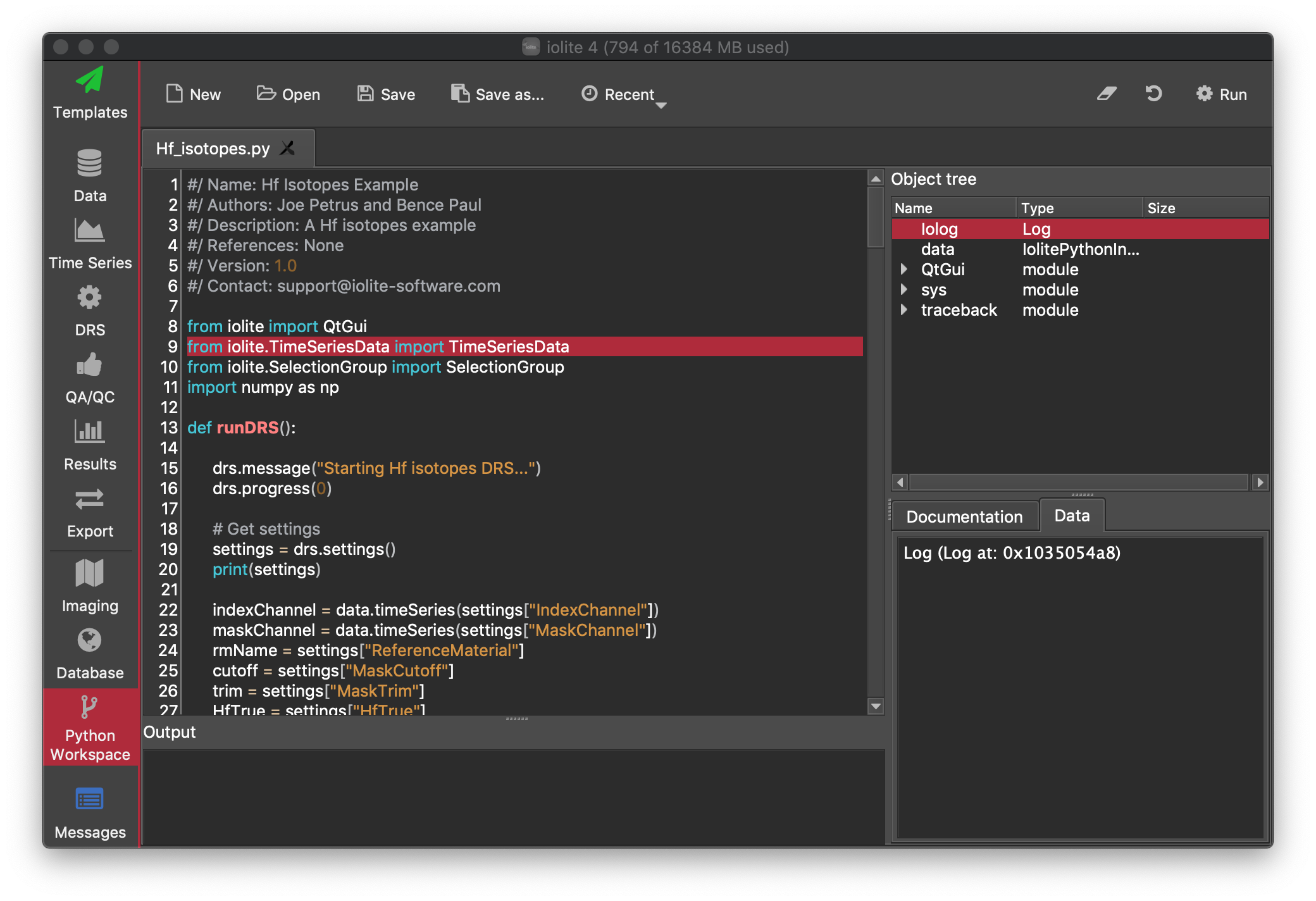
iolite v4 provides exceptional flexibility with the iolite Python Application Programming Interface (API).
Harness the power of Python with iolite's Python API
Analyse your data with SciPy, create your own plots with MatPlotLib, or create your own data importers with Pandas or Python's database libraries.
Full Scriptability
Create your own Data Reduction Schemes, custom importers, exporters and much more. You have full access to your data, and iolite's user interface elements, to make as simple (or as complex) additions to your version iolite. Share them with colleagues, or build on what others have crafted.
Join the largest community of LA-ICPMS users with more than 200 labs around the world using iolite, including commercial labs, Research & Development departments, government agencies, and LA-ICPMS researchers, all contributing to the iolite community.
15+
900+
1924+
PURCHASE iolite v4:
The most powerful data processing software package on the market
iolite v4 comes with everything you need to process datasets associated with the most common LA-ICPMS applications.